An out-of-town buyer's lender pulled comps for a home under contract in Golden Hills West last spring and the appraisal came back low. Not because the house had problems. Because two of the five comparable sales the automated system selected were near-campus duplexes configured for four unrelated tenants each, a mile and a half away and a different animal entirely. The buyer's agent had to submit a rebuttal with hand-picked comps just to get the number where the contract price already was.
That friction points to something worth understanding before you make an offer in this neighborhood: Pullman does not have one housing market. It has at least two, stacked under a single ZIP code and a single "median price" headline, and Golden Hills West sits almost entirely in the one that doesn't behave like the number you saw on a portal.
The median price three sources can't agree on
Pull up three market trackers in the same week this summer and you get three different answers for what a house in Pullman costs.
| Source and window | Reported figure |
|---|---|
| Home value index, late June 2026 | $429,145, up 3.0% year over year |
| Sale-price tracking, three months ending May 2026 | $430,000 median, down 5.5% year over year, 19 days on market |
| Sold-home tracking, June 2026 | $469,000 median, 58 days on market |
A $40,000 spread on a median in a city this size isn't noise. It's what happens when you average two different products together and call it one market. Condos and small near-campus units drag the blended number down. Detached single-family homes in owner-occupied subdivisions pull it up. Depending on which month's sales mix a given tracker happens to catch, the median swings by tens of thousands of dollars without a single house actually changing in value.
If you're comparing Golden Hills West to that citywide figure, you're comparing it to a number that describes almost nothing in particular.
The 69/31 split that explains the swing
Here's the structural reason the blend exists. Across Pullman, roughly 8,212 households rent and 3,735 own, a split of about 69% renter-occupied to 31% owner-occupied, with average rent sitting around $1,447 a month as of April 2026. Estimates of the citywide rental vacancy rate vary by source, landing anywhere from the low teens to nearly 15%, but every estimate agrees on the same basic shape: this is a market built around tenants, not owners.
That matters for comp pulls and appraisals because most of Pullman's transaction volume, and therefore most of its "market data," comes from properties bought and sold as rental income plays. Investors buy near campus, price on cap rate and bedroom count, and sell to the next investor. None of that pricing logic applies to a family buying a detached home two miles west of campus to live in. But if the comp software or the news headline doesn't know the difference, it averages them together anyway.
What actually drives the rental side of that split
The renter-heavy side of Pullman's market isn't random. It's timed by a specific university policy.
Washington State University requires first-year students under 20 to live in university housing for one full academic year, a rule the university calls its live-in requirement. That single policy has a predictable downstream effect: it delays the moment a WSU student first goes looking for an off-campus lease until sophomore year, and it concentrates that demand in the blocks and complexes within walking or biking distance of campus, because that's where a 19- or 20-year-old without a car wants to live.
The result is an annual cycle. Leases turn over on the academic calendar. Search volume for off-campus housing climbs through the fall and peaks after winter break, as students who've finished their required year on campus start locking in a place for the following fall. Landlords near campus price to that cycle. Investors buy to that cycle. And every transaction in that cycle gets folded into the same "Pullman median" that gets quoted for the whole city.
Golden Hills West is far enough from that cycle, both in distance and in housing form, that almost none of this touches it directly. That's the mechanism. It's not that the neighborhood is nicer or newer. It's that the university's own housing rule keeps its highest-volume rental demand physically concentrated somewhere else.
Why the west side sits outside the cycle
Three things keep Golden Hills West out of the rental comp pool, and none of them are subjective.
Distance is the first. The subdivision sits on the west side of Pullman, a short, predictable drive from downtown and campus rather than a walk. A 19-year-old without a car isn't shopping this ZIP code for a lease. A commuter or a Washington State University staff member with a car is.
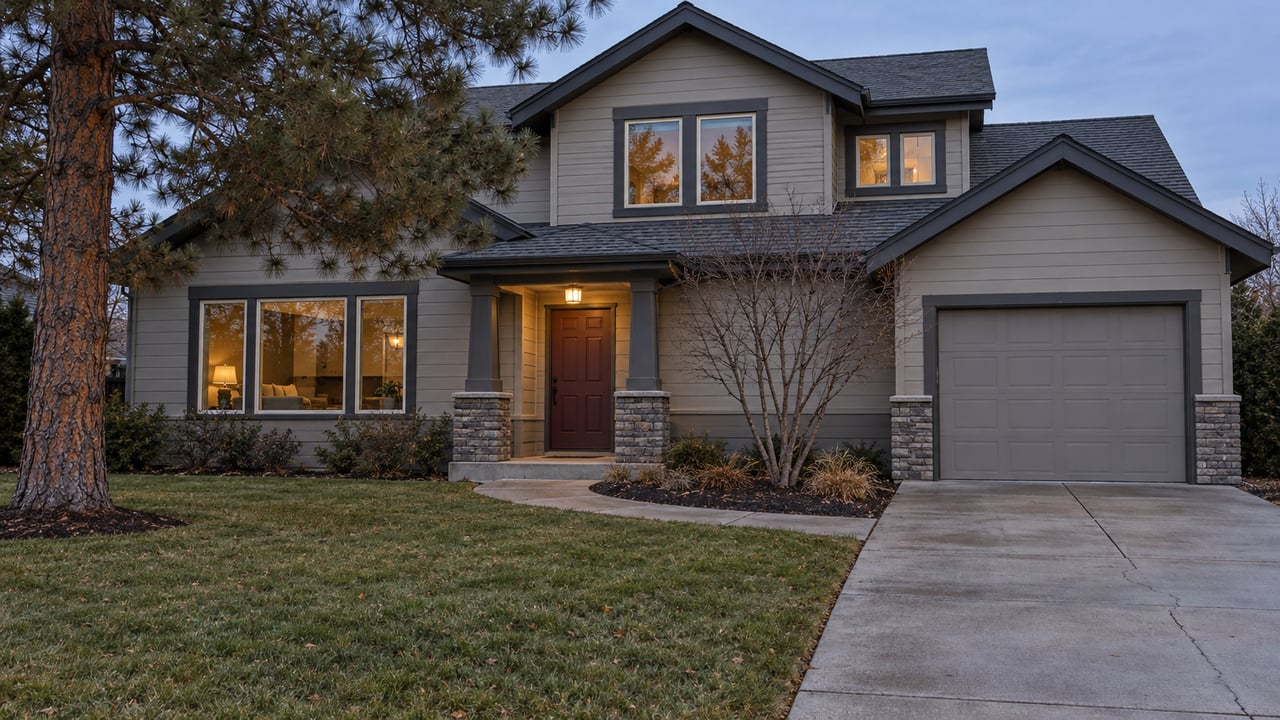
Housing form is the second. This is a subdivision of detached single-family homes on individual lots, not the converted houses and small multi-unit buildings that dominate the near-campus rental stock. A four-bedroom student rental and a three-bedroom family home might both be "houses" on paper, but they get financed, insured, and comped completely differently, and appraisers who don't know the neighborhood sometimes miss that distinction.
Employment gravity is the third. Golden Hills West sits close to Schweitzer Engineering Laboratories, one of the region's largest private employers, along with easy access to downtown and Sunnyside Park. That's a draw for engineers, faculty, and working professionals buying a home to live in for years, not for a landlord buying four bedrooms to fill every August. Comparable west-side subdivisions built in the same era carry light HOA structures rather than heavy rental restrictions. One nearby property in this stretch of west Pullman, for example, carries an HOA fee of just $136 twice a year, a covenant structure built around owner-occupied maintenance standards rather than rental turnover management.
None of that shows up in a citywide median. All of it shows up in who actually buys here and why.
What this means when you're the one making an offer
If you're comparing Golden Hills West to the number you saw on a market report, adjust for three things before you anchor a price.
- Ask your agent to pull comps specifically from west Pullman single-family subdivisions built in a similar era, not a citywide radius search that will sweep in near-campus rental stock.
- If you're financing, flag for your lender up front that the subject property is in an owner-occupied subdivision away from campus, so the appraisal order can request comparable adjustments before the report comes back low.
- If you're selling, expect your buyer pool to skew toward owner-occupiers rather than investors, which changes how you should think about staging, timing, and negotiating room compared to a near-campus listing.
The citywide numbers aren't wrong. They're just describing a blended market that Golden Hills West mostly sits outside of. Knowing that before you write or review an offer is the difference between negotiating from the right baseline and negotiating from someone else's.
FAQ
Why did my lender's appraisal come back lower than the contract price? Automated and even manual comp pulls sometimes default to a citywide radius search, which can sweep in near-campus rental-configured properties that don't reflect a detached, owner-occupied home in Golden Hills West. Requesting a comp set limited to comparable west Pullman subdivisions can correct this before it becomes a financing problem.
Does the WSU Freshman Live-In Rule affect resale value here? Not directly. The rule shapes rental demand and pricing near campus, which is a different transaction pool than the one Golden Hills West sells into. It's relevant mainly as an explanation for why citywide rental statistics shouldn't be applied to this neighborhood's resale comps.
Are HOA fees typical in this part of west Pullman? Some subdivisions in this area carry light HOA structures, generally in the range of low semi-annual dues covering shared maintenance rather than rental oversight. Confirm the specific covenant for any address you're considering, since terms vary by phase and builder.
If you're weighing a purchase in Golden Hills West and want comps pulled the right way from the start, Pullman Properties can walk you through what the west-side market is actually doing, house by house, before a lender's software tries to tell you otherwise. Let's Connect.
This article is general information, not legal, tax or financial advice. Consult a qualified professional about your situation.