Pull up four different sites and ask what a home in Pullman costs right now, and you get four different answers. Redfin puts the median sale price at roughly $430,000 over the three months ending May 2026, down 5.5% year over year. Zillow's Home Value Index reads $429,145 and calls it up 3.0%. Movoto shows a June 2026 median list of $469,000, down 3%. Houzeo pegs January 2026 at $429,000, essentially flat.
Those numbers do not disagree because one is wrong. They disagree because Pullman is not one market, and nowhere is that clearer than in the blocks around Pullman Halls, where the homes closest to Washington State University trade against a completely different math than the homes a few streets over.
The number that should bother you
Redfin reports homes selling in a median of 19 days. Movoto reports 58. That is not a rounding error. It is two buyer pools sharing a ZIP code.
Near Pullman Halls, the same house can be priced two different ways depending on who the seller decides to sell to. The citywide median hides that choice.
One pool is investors buying for student cash flow. The other is owner-occupiers, many of them WSU faculty, staff, and now medical households tied to the Pullman Regional Hospital expansion. They value different features, run different math, and move on different timelines. When a listing is configured for one pool and marketed to the other, it sits. When it is configured and marketed correctly, it clears fast.
Two buyer pools, one ZIP code
| Investor pool | Owner-occupier pool | |
|---|---|---|
| What they buy | 3 to 6 bedrooms, off-street parking, close walk to campus, durable finishes | Open plan, yard, quiet street, updated kitchen, garage |
| How they price | Cap rate against per-bed rent, capex reserve | Comparable sales, appraisal, financing constraints |
| Decision speed | Fast, cash or portfolio lender, short DD | Slower, mortgage contingency, inspection negotiations |
| Seasonal peak | Fall and February, driven by the WSU lease cycle | February through July |
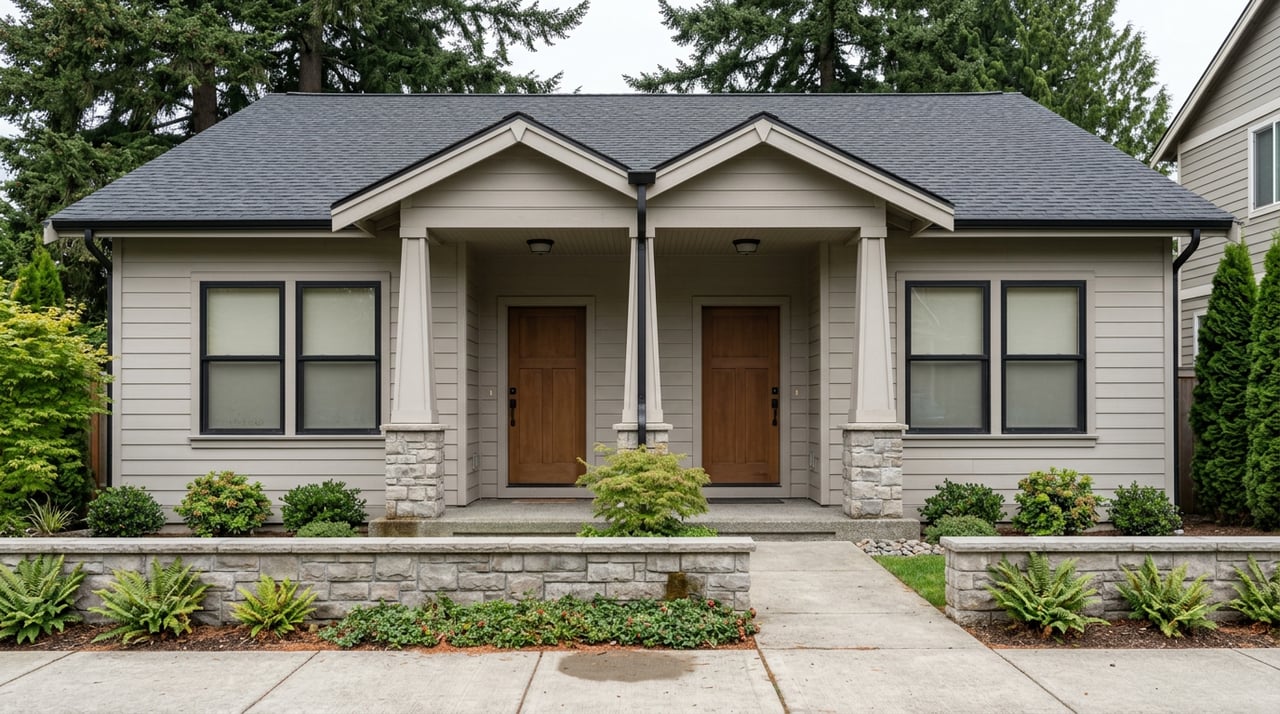
| What a bad match looks like | A 4-bedroom charmer with one bath and no parking | A rental-configured duplex with a chopped floor plan |
The Houzeo January 2026 read on the citywide market, 3.3 months of supply and a 98.44% sale-to-list ratio, describes a balanced average. Underneath that average, rental-configured inventory near campus keeps turning inside three weeks while owner-occupier listings a few blocks off campus sit closer to two months.
What a rental-configured home actually sells against
Investor buyers in this pocket are running one calculation: per-bed rent times occupancy, minus expenses, divided by the price. WSU's off-campus resources cluster listings east of North Grand Avenue and north of Main Street toward Kitzmiller Road, and student demand still shows up on the College Pads calendar, with searches beginning in October and peaking in February after winter break.
Enrollment is the number that changes the cap-rate math, and it is finally moving in a direction investors can underwrite. WSU's Pullman campus held at 16,248 students in fall 2025, down only about 200 from the year before after several years of steep declines, and the first-year class rose for the third straight year. That is not growth. It is stabilization, which is what an investor needs to model a five-year hold on a four-bedroom rental.
A rental-configured home sells against a spreadsheet. The listing photo that matters is the off-street parking. The finish level that matters is durable, not designer.
What a family-configured home sells against
The owner-occupier pool near Pullman Halls looks nothing like that. It is faculty, graduate researchers, professionals with families, and, increasingly, clinical hires attached to the Pullman Regional Hospital patient-care expansion. Phase 1 of that expansion received Washington State Department of Health sign-off on June 30, 2026, with remaining phases scheduled to continue through late 2027. Each new department opening creates a household that needs a house, and those households almost never want a chopped-up rental floor plan.
For this buyer, price is anchored by appraisal, and appraisal is anchored by comparable sales. If three rental duplexes closed on the block last quarter at investor math, they can pull the comp set down for a family-configured home listed the same month. That is the appraisal friction sellers in this area actually run into, and it is the argument for pricing and marketing the property to the right pool from day one rather than hoping both will show up.
The 2026 signals shifting the mix
A few things happening in Pullman this year are quietly moving the balance between the two pools:
- Hospital expansion hiring. The Pullman Regional Phase 1 build-out added laboratory, surgical, and infrastructure capacity, with construction on later phases continuing into late 2027. That is a multi-year pipeline of owner-occupier households.
- Stabilizing enrollment. A flat 16,248 at Pullman campus after years of declines lets investors underwrite occupancy without discounting for another leg down.
- Downtown and arterial work. The city's Terre View Drive and Northwood Drive resurfacing, awarded to Motley-Motley of Pullman, runs June through end of September 2026, and Bishop Boulevard resurfacing runs May into late July. Both change showing routes and short-term walkability perceptions during peak selling months.
- Infrastructure funding for new housing. The January 2026 Connecting Housing to Infrastructure Program award of $110,188 to a Pullman housing project is small on its own, but it is a signal that new affordable inventory is coming online in the next 24 months. Investors watching future supply care about this. Owner-occupiers do not.
Read together, those signals push the mix slightly toward owner-occupier demand at the margin. That has direct pricing implications for a well-configured family home sitting three blocks off Reaney Park.
The transaction friction most buyers miss
Two frictions consistently surprise buyers who come from bigger markets and assume Pullman is simple.
The first is comp scarcity. Pullman is a small MLS. In a given quarter, the closed comp set for a specific home style within a half-mile of Pullman Halls may be four properties, and one of those four may be an investor deal that dragged the average per-square-foot number down. When your lender's appraiser pulls comps, that noise matters. Building the appraisal packet with the listing agent, and knowing which recent closings to defend or exclude, is often the difference between a clean close and a renegotiation.
The second is the calendar. WSU's leasing rhythm sets the tempo for the investor pool, which starts hunting in October and peaks in February. The owner-occupier pool follows the traditional February-to-July window. If you are an owner-occupier buyer competing in October, you are competing against investors who move faster and waive more. If you are an owner-occupier seller listing in June, you have the field mostly to yourself. Timing the listing to the right pool is a lever most sellers never touch.
How to read a Pullman Halls listing before you offer
- Count the bedrooms and the bathrooms, then look at the bathroom ratio. A 4/1 is a rental. A 4/2.5 is a family home.
- Look for off-street parking count. Two off-street spots reads owner-occupier. Four or more reads investor.
- Check the floor plan for a locked lower level or a second kitchen. Both signal a rental configuration, and both narrow the appraisal comp set.
- Look at days on market against the citywide median of 19 to 58. A listing sitting past 45 days is usually mispriced for its pool, not overpriced for the market.
- Ask when the seller wants to close. Investors want summer for a fall lease-up. Faculty want summer for the academic calendar. Both are competing for the same closing dates.
FAQ
Is Pullman a buyer's or a seller's market right now? Both, depending on the pool. The citywide sale-to-list ratio of 98.44% and 3.3 months of supply reported for January 2026 read balanced. Investor-configured inventory near campus behaves like a seller's market. Owner-occupier listings behave closer to balanced.
Why do Redfin, Zillow, Movoto, and Houzeo disagree on the direction of prices? They measure different things over different windows. Redfin measures closed sales in a rolling three-month window. Zillow's index is a modeled typical value. Movoto reports list prices. Houzeo reports a single month. In a small MLS like Pullman's, a handful of investor closings can swing any one of those readings.
Does WSU enrollment still drive the market? Yes, but not the way it used to. Enrollment now sets the floor for the investor pool rather than the growth rate. Hospital expansion and clinical hiring are the marginal drivers for the owner-occupier pool.
When should I list a family home near Pullman Halls? The February-to-July window still concentrates owner-occupier demand, and listings that hit the market before the WSU academic calendar resets in August tend to see the cleanest comps.
The homes in and around Pullman Halls are not priced by a single number, and no portal median is going to tell you which pool your target home should be sold to. That call is a local one, made from years of watching which configurations clear and which sit. If you are weighing a purchase or preparing a sale in this pocket of Pullman, Pullman Properties would welcome the conversation. Let's Connect.