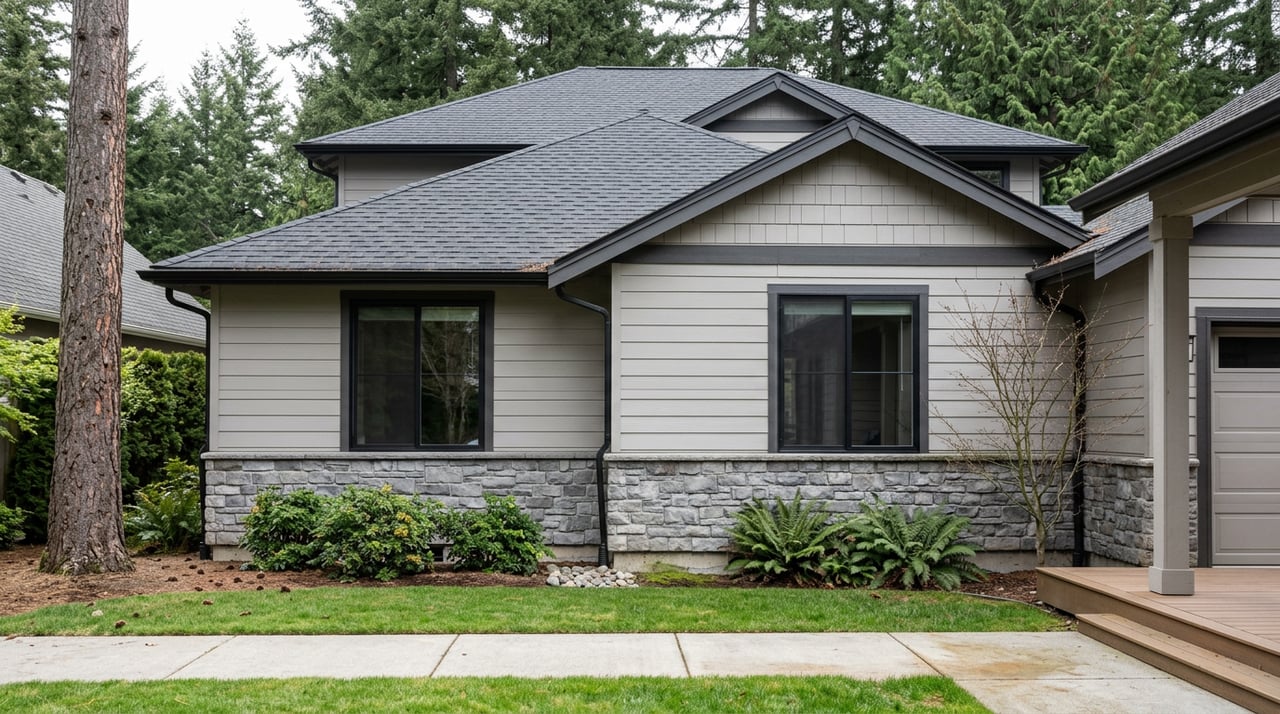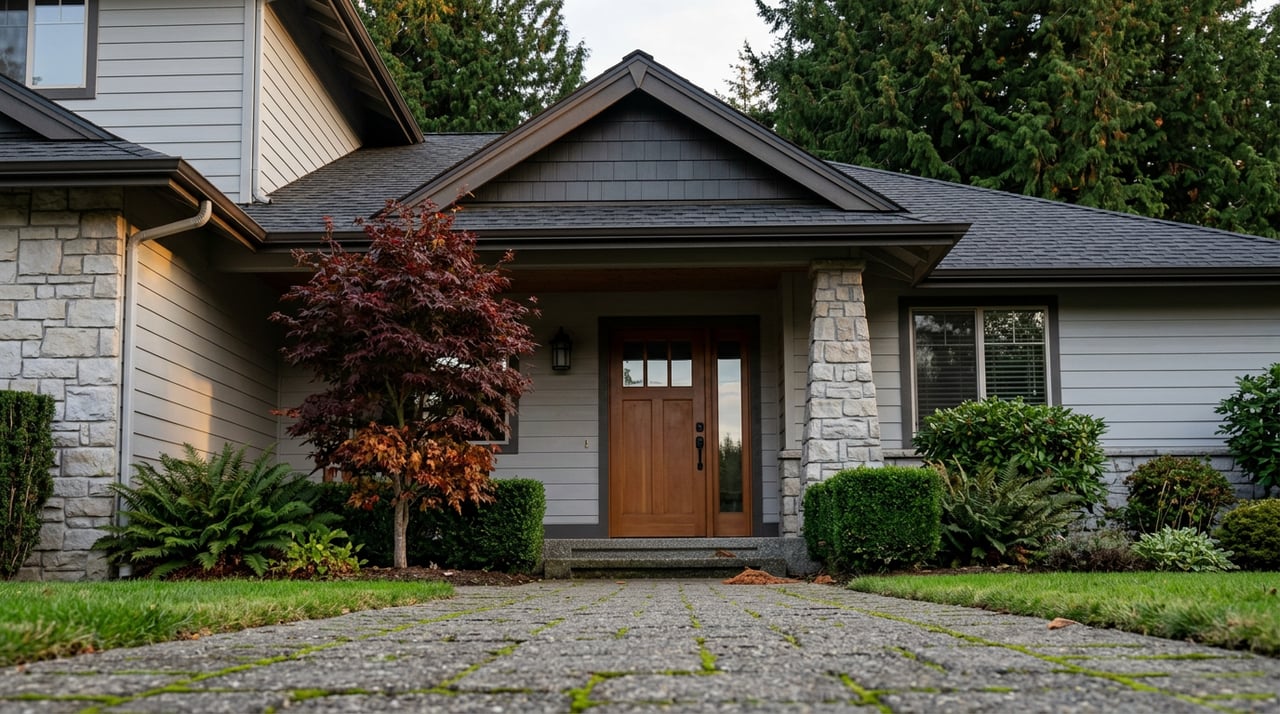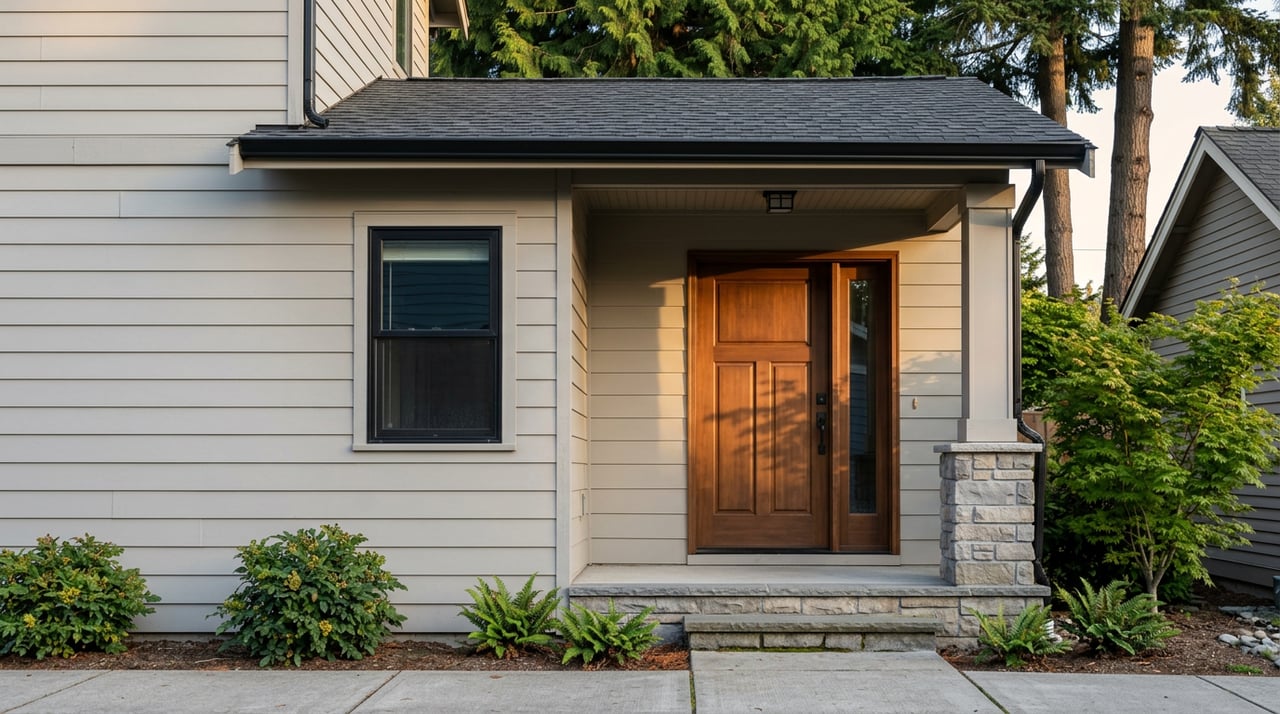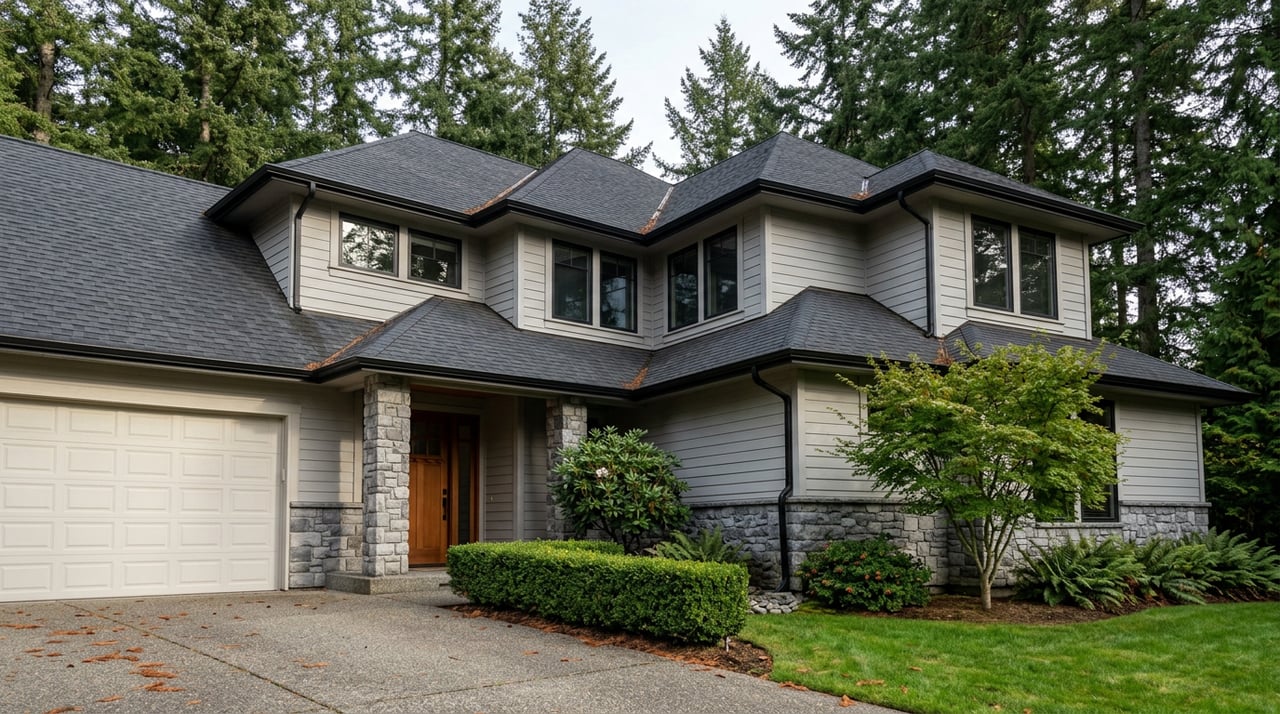
Search "Paradise Ridge homes for sale" in Pullman and you'll pull up a 1999-vintage three-bedroom on a standard city lot right alongside a brand-new view-lot build with vaulted ceilings and a three-car garage. Both carry the same neighborhood name. Neither listing tells you they were built roughly twenty-five years apart, under different zoning assumptions, by different builders, with different ideas about what "Paradise Ridge" was supposed to be when the dirt was first moved.
That gap matters more than it looks like it should, and it's the reason a median price or a per-square-foot number from this neighborhood is close to useless without knowing which phase you're standing in.
A City-Recruited Housing Project That Never Stopped Building
Paradise Ridge didn't start as a luxury view community. It started as a fix for a housing shortage. In the 1990s, Copper Basin Construction, a builder out of Coeur d'Alene, was recruited by the city of Pullman after officials saw the company's affordable housing work in Rathdrum and decided to bring the same model here. Sales manager Bill Cooper described a plan to presell 60 homes on land purchased near Pullman High School, with prices running from $90,900 for a two-bedroom, one-bath model up to $113,500 for a four-bedroom, two-bath house, built two at a time as reservations came in. The pitch was straightforward: Pullman had suffered for years from a housing shortage that was pushing prices up and forcing workers to commute in, and this was meant to be the release valve.
That original push became what the city's plat records call Paradise Ridge No. 1 and No. 2. It did not stop there. By 1999, the Pullman Planning Commission was hearing a preliminary plat application for Paradise Ridge No. 3, an 11.5-acre parcel southwest of Pullman High School on Military Hill, divided into 25 lots, with a companion application for No. 4 moving through the same meeting. City permit logs show the subdivision kept extending in numbered installments well past that: a building permit in Lot 9, Block 2 of Paradise Ridge No. 7 shows up in a September 2021 log, and a Lot 20, Block 3 permit in Paradise Ridge No. 8 appears in an October 2024 log. That's a subdivision that grew, in fits and starts, across roughly three decades under one name.
Here's a rough sketch of what the paper trail shows:
| Phase | When it appears in the record | Source |
|---|---|---|
| No. 1 & 2 | Already built and generating stormwater by December 1998, per testimony at the 1999 hearing | Pullman Planning Commission minutes |
| No. 3 & 4 | Preliminary plat heard by the Planning Commission in 1999 | Pullman Planning Commission minutes |
| No. 7 | Active building permit logged | City of Pullman permit log, September 2021 |
| No. 8 | Active building permit logged | City of Pullman permit log, April 2024 |
A neighborhood that opens new phases twenty-five years apart is not one product. It's a series of products sharing a street name, and the further-out phases were built to entirely different market expectations than the affordable starter homes Copper Basin Construction pitched in the 1990s.
The Zoning Line Nobody Drives Past On Their Way In
The 1999 hearing record has a detail that would surprise most buyers walking Canyon View Drive today: the underlying zoning for Paradise Ridge No. 3 was R2 Low Density Multi-Family Residential, not the single-family R1 designation the finished streetscape suggests. The applicant's stated intent was to build single-family homes, even on lots as large as 60,000 square feet, but staff noted plainly that the city couldn't hold the developer to that intent going forward. The same hearing also dealt with a wetland mitigation plan for the site and a debate over stormwater runoff, with one commissioner raising concerns that a detention pond had already failed once, during a significant runoff event in December 1998, and could fail again.
None of that shows up when you're touring a finished house. What it means in practice: the multi-family zoning classification travels with the parcel, not with whatever single-family home happens to be sitting on it today. A buyer evaluating resale potential, a future teardown, or an accessory dwelling unit on an older Paradise Ridge lot is working from a different legal starting point than a buyer looking at a lot in a phase platted under straightforward R1 rules. That's not a hypothetical concern about zoning maps. It's baked into the plat documents for the specific lots inside this specific subdivision.
The Neighbor With Almost the Same Name
If the phase numbering weren't confusing enough, Paradise Ridge sits a short stretch up Canyon View Drive from a separate subdivision called Paradise Hills, which uses its own parallel numbering system. City permit logs show building activity in Paradise Hills No. 9, No. 10, and No. 11 in 2021, the same year Paradise Ridge was pulling permits for its own No. 7 phase a short distance away. Paradise Hills is currently marketed as Pullman's newest development, with large covenant-protected lots near Kamiak Elementary School and Pullman High School, and fiber optic service on the way. It is being sold, in other words, as a distinctly newer, more restricted product than the older Paradise Ridge phases sitting nearby.
Two subdivisions, same road, nearly identical names, both broken into numbered phases. A buyer or an out-of-town appraiser skimming portal search results can easily blend Paradise Ridge comps with Paradise Hills comps, or vice versa, without realizing they're mixing two different developments with different covenant structures and different build eras. That's the kind of mix-up that doesn't show up until an offer is already on the table and someone is trying to justify a price with comparables that don't actually match.
What This Means When You're Comparing Two Listings
If you're cross-shopping Paradise Ridge against another Pullman neighborhood, or against a specific house inside Paradise Ridge itself, the phase number and the covenant status matter more than the neighborhood name on the listing sheet. A few practical habits follow from that:
Ask which numbered phase a specific address falls in before you compare its price to anything else in the area. The Pullman Planning Commission's 1999 record and the county's legal descriptions both reference these phase numbers directly, and they're the fastest way to know whether you're looking at 1990s-era construction or something built in the last few years.
Check whether the parcel's underlying zoning is R1 or R2 before assuming a lot's future use is locked in as single-family. The 1999 hearing record makes clear that intent to build single-family does not change the zoning classification itself.
Don't assume covenant protections are uniform across the whole neighborhood. Paradise Hills is explicitly marketed as covenant-protected as part of its appeal. Older Paradise Ridge phases were built under a different set of expectations, and buyers should confirm covenant status for the specific phase rather than assuming it carries over from a newer, adjacent development.
A Few Questions Worth Asking Directly
Is Paradise Ridge the same neighborhood as Paradise Hills? No. They're separate subdivisions on the same corridor, each with its own numbered phases. Paradise Hills is the newer of the two and is marketed with covenant protections and proximity to Kamiak Elementary and Pullman High School.
Does the R2 zoning on some Paradise Ridge lots mean a duplex could go up next door? It means the underlying zoning classification allows for multi-family use on that specific parcel, regardless of what's currently built there. Anyone concerned about future development potential on a specific lot should confirm the parcel's zoning designation rather than relying on the finished streetscape.
Why does the phase number matter more than the neighborhood name when comparing prices? Because homes built in Paradise Ridge No. 1 and No. 2 went up under a 1990s affordable-housing model, while more recent phases like No. 7 and No. 8 were built to a different market and, in some cases, a different lot size. Comparing a price per square foot across those phases without accounting for build era is comparing two different products that happen to share an address prefix.
If you're weighing a specific Paradise Ridge address against something else on the market, or you want a phase-by-phase read on what a particular lot's zoning actually allows, that's exactly the kind of local detail Pullman Properties works through with clients every day. Let's Connect and we'll pull the actual plat and parcel records for the address you're looking at, not just the neighborhood name on the sign.