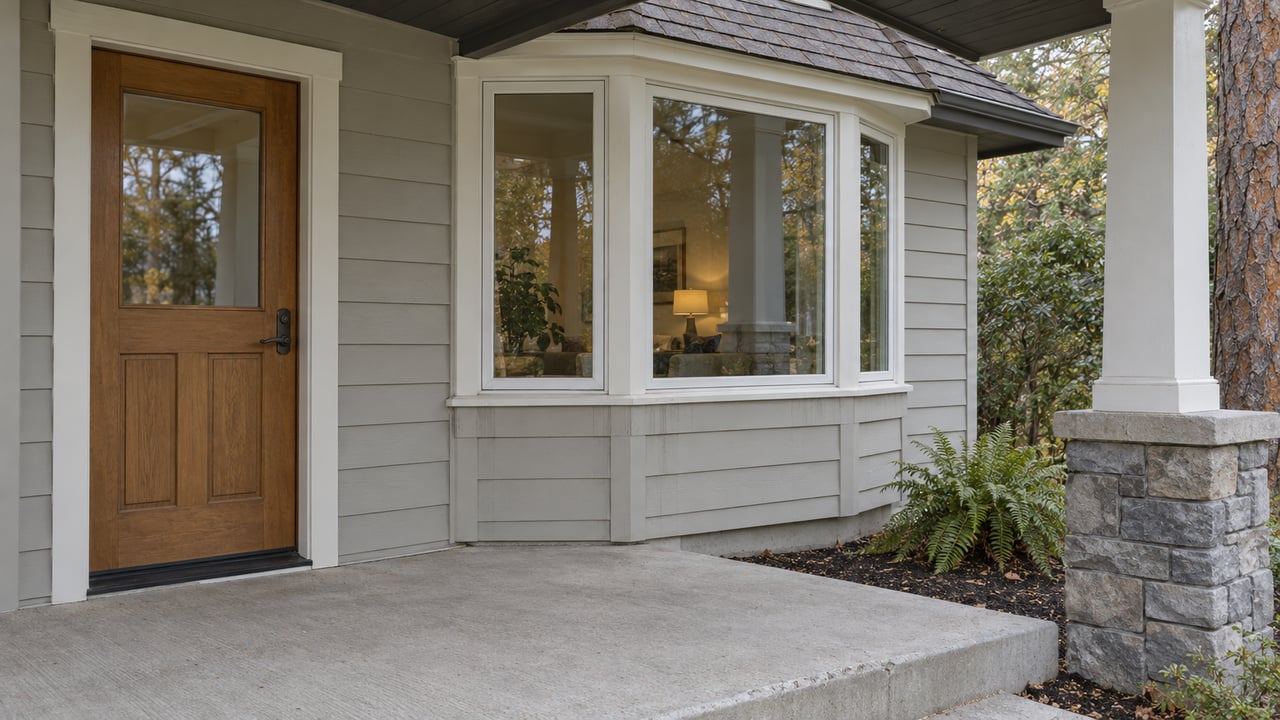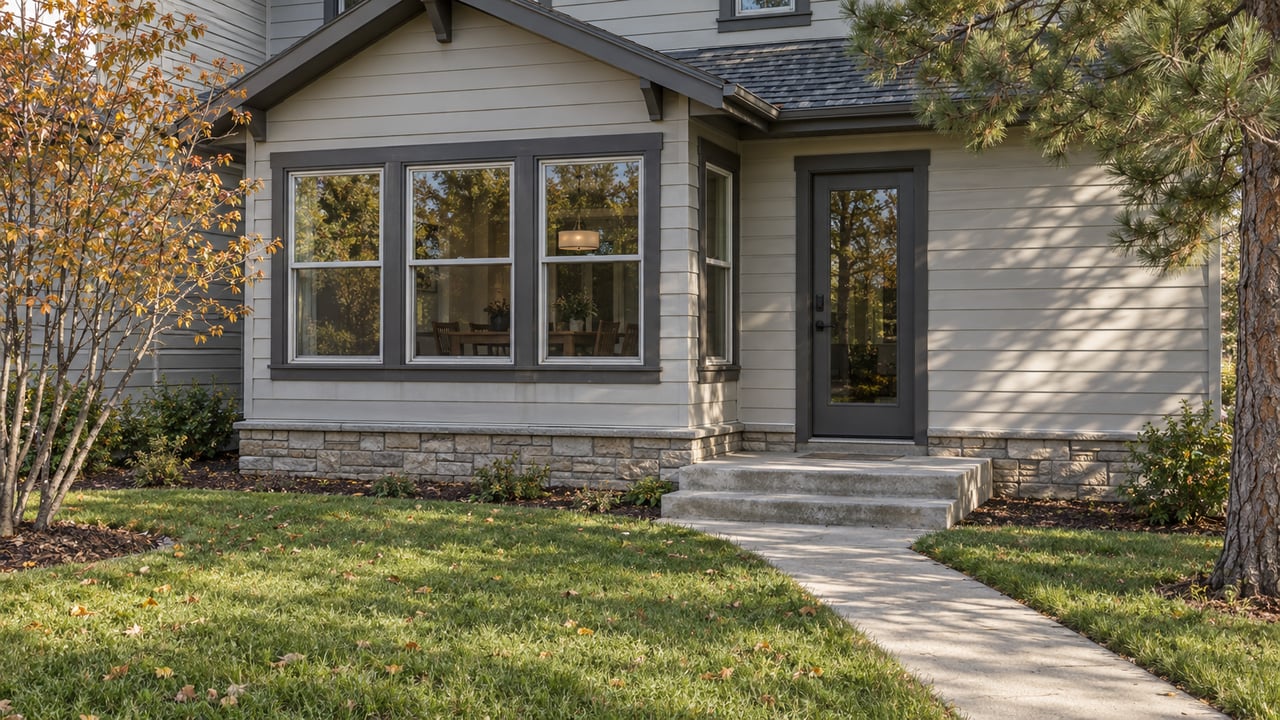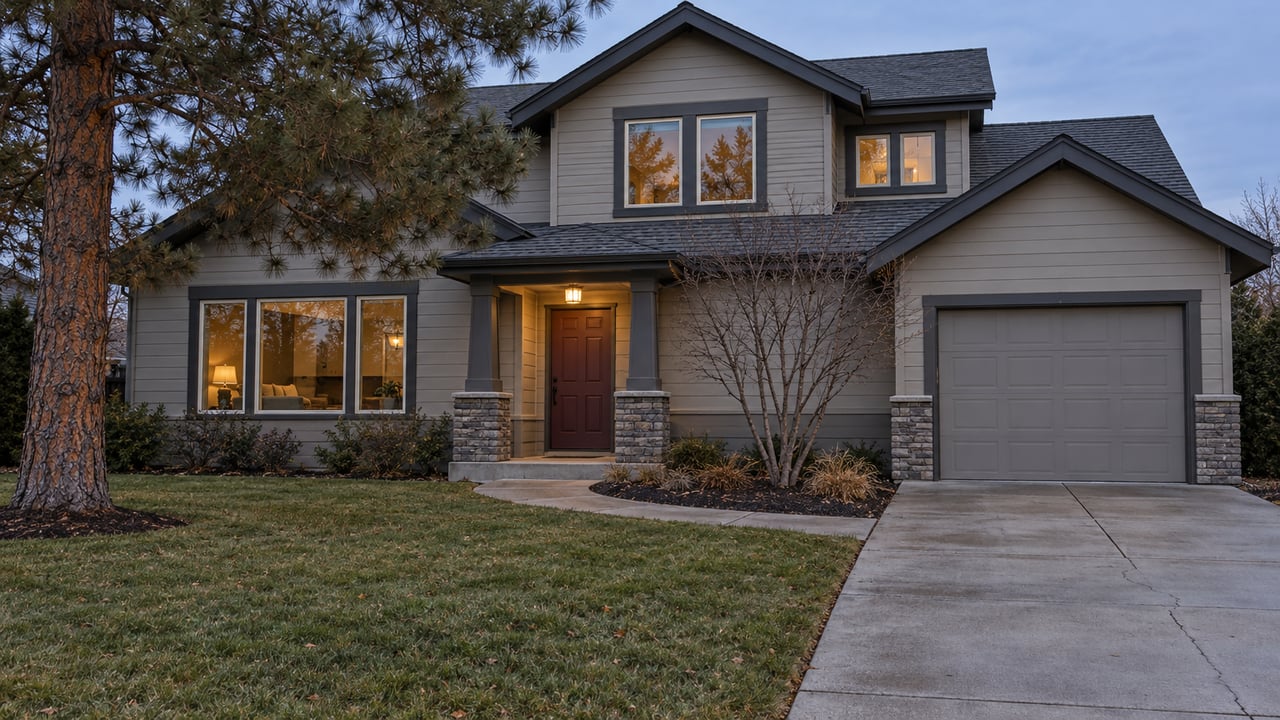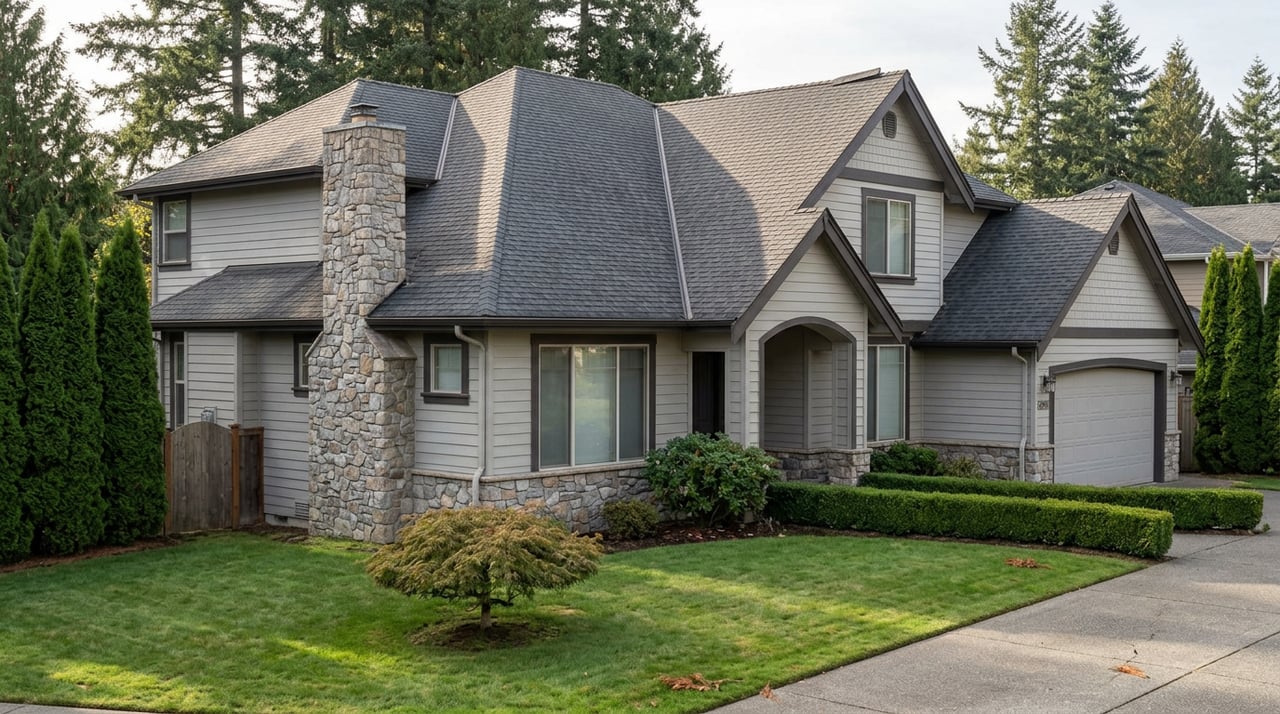
In June 2026, a six bedroom custom home on SW Golden Hills Drive in Pullman sold for $1,195,000. It sits in Barclay Estates, a site-built plat on the west side of town with hardwood floors, a great room with floor to ceiling windows facing the Palouse, and a slab quartz kitchen island. A few blocks north, on NW Golden Hills Drive, a three bedroom manufactured home was recently listed for well under $100,000, with a monthly lot rent on top of the purchase price.
Same street name. Same general part of Pullman. Same ZIP code, 99163. Two buyers walking into these transactions with the same pre-approval letter would find out fast that only one of them can actually use it.
That is the thing about Golden Hills West that a median price, a Zestimate, or a quick scroll through listing photos will not tell you. The neighborhood carries three different housing products under one familiar name, and the compass direction in the address is doing more work than most buyers realize before they fall for a listing.
The Address Is a Clue, Not a Formality
Golden Hills West, in the sense most Pullman buyers mean it, is the site-built subdivision on the west side of town: single-family homes built mostly in phases from the 1990s through the 2010s, on fee-simple lots, connected to city water and sewer. Barclay Estates is one of the plats inside that broader area, and it is where you find the custom builds and the higher price points.
Then there is Golden Hills Manufactured Home Park, built in 1995 at 255 and 260 NW Golden Hills Drive, a land-lease community of 125 home sites. The homes there are owned by their residents. The land under them is not. Water comes from a well and wastewater goes to a septic system, not the city utility grid. Lot rent is charged on top of whatever the buyer pays for the home itself.
A short walk away, at 640 SW Golden Hills Drive, there is a third variation: The Residence at Whispering Hills, an apartment community built in 2013 with additional units added in 2016 and 2017. Three different housing products, three different ownership structures, all clustered under a name that shows up in search results and portal filters as one neighborhood.
None of this is a flaw in how Pullman grew. Manufactured home communities have long served as an affordable entry point near university towns, and this one has done exactly that for three decades. But it does mean the word "Golden Hills" on a listing sheet is not enough information to know what you are actually buying, or what loan product you will need to buy it.
Why the Same Name Covers Three Different Housing Products
The community's own marketing noted that the park went up for sale in 2026 for the first time since its 1995 construction. The park sits beside site-built subdivisions and has stayed at full occupancy, with a resident base that includes retirees, WSU faculty, and graduate students, the kind of steady demand that keeps a well-run manufactured community full even as the site-built market around it moves through its own cycles.
That proximity is exactly why the naming overlap causes confusion. From the street, a well-kept manufactured home with a fenced yard and a covered deck can look just as finished as a site-built ranch two blocks over. The difference is not visible from the sidewalk. It shows up at the title company and the lender's desk.
The Financing Wall
This is the part that catches buyers off guard, because it does not show up until an offer is already written.
A home in the site-built subdivision, where the buyer owns both the structure and the land, qualifies for conventional, FHA, VA, or USDA financing, the same mortgage products used across the rest of Pullman.
A manufactured home on leased land in the park cannot use any of those in the buyer's own name, because the land is not part of the deal. The only financing path available is a chattel loan, which covers the home as personal property rather than real estate.
| Site-built home (fee simple land) | Manufactured home on leased land | |
|---|---|---|
| Loan type | Conventional, FHA, VA, USDA | Chattel loan only |
| What's financed | Home and land together | Home only, land is leased |
| Typical rate | Standard mortgage rate | 2 to 4 percentage points higher |
| Typical term | Up to 30 years | Often 15 to 25 years |
| Down payment | As low as 3 to 5% on many programs | Generally higher, lender dependent |
| Equity path | Builds with land appreciation | Tied to the home only, no land upside |
The only way a park home converts to real property financing is if the buyer separately purchases the underlying land and goes through title retirement under Washington's RCW Chapter 65.20, which sets out the legal process for converting a manufactured home from personal property to real estate. In a land-lease community, that path does not exist, because the land was never for sale to begin with.
This is not a knock on chattel financing. For a buyer who wants a lower entry price and is comfortable with a shorter loan term, it is a legitimate and long-used tool, especially in a college town where affordable ownership options near campus are limited. The point is narrower: a pre-approval letter written for a conventional mortgage will not transfer to a park purchase, and a buyer who assumes it will can lose real time, and sometimes the home, discovering that mid-transaction.
What a Home Value Estimate Won't Show You
Run an automated home value estimate on a listing in the manufactured home park and the number it produces means almost nothing next to a site-built comp two streets away, even though both addresses say "Golden Hills." The two products do not share an appraisal pool. Lenders and appraisers price them on entirely different bases: comparable land-lease sales for the park, comparable fee-simple sales for the subdivision.
Lot rent adds another layer that a sale price alone does not capture. A buyer needs to run the monthly lot rent against their budget the same way they would run a mortgage payment.
There is a path around that risk. The Washington State Housing Finance Commission has a program that helps manufactured home community residents form resident-owned cooperatives to buy the land under their homes outright, trading a rising lot rent for a stake in the land itself. It is worth knowing about if you are already living in or considering a purchase in a land-lease community anywhere in the region, particularly one changing ownership for the first time in three decades.
What to Check Before You Write the Offer
- Confirm whether the parcel is fee simple or land-lease. The county assessor's parcel record will show this, and it is worth confirming before you get attached to a listing.
- Ask your lender directly whether the property qualifies for a mortgage or only a chattel loan, and get that answer in writing before you write an offer.
- If it's a land-lease home, request the current lease terms, including any scheduled rent increases, not just the current monthly rate.
- Check whether the home is on city water and sewer or on a well and septic system, since that affects both financing and ongoing maintenance responsibility.
- If you're comparing a park home to a subdivision home using an online estimate, treat that number as a starting point only. Ask for comparable sales within the same ownership structure.
FAQ
Is the manufactured home park actually part of the Golden Hills West neighborhood? It sits on NW Golden Hills Drive, adjacent to the site-built subdivision, but it uses well water and septic rather than the subdivision's city water and sewer. It is a separate land-lease community with its own ownership structure, not a phase of the fee-simple subdivision.
Can I ever get a conventional mortgage on a home in the park? Only if you separately acquire the underlying land and complete title retirement under Washington's manufactured home conversion statute. In a land-lease community, that land typically is not for sale, so most buyers there use chattel financing instead.
Why did the park go up for sale in 2026 after 30 years under one owner? Its own marketing material describes it as coming to market for the first time since its 1995 construction, under the same owner for nearly three decades. It is worth asking any seller in the park about how leases are structured going forward.
If you are weighing a purchase anywhere along Golden Hills Drive, or anywhere else in Pullman where a neighborhood name covers more than one kind of property, it helps to have someone who can tell you which market you are actually standing in before you write the offer. Pullman Properties has spent decades watching how these distinctions play out at the closing table. Let's Connect and walk through what a specific address really means for your financing.
This article is general information, not legal, tax or financial advice. Consult a qualified professional about your situation.